Investment Handbook
Checking Property Boundaries and Access Rights
Check what a Syrian property offer includes by separating visible boundaries and access routes from records, measurements and legal rights still to verify.
In this article


A gate, a paved route and a wall can make the limits of a home feel obvious. They do not establish which land or shared space a buyer would acquire, or whether the route used during a viewing can continue to be used afterward. For a Syrian property, separate what you can see from what the documents and qualified advisers can establish. This guide gives a buyer a way to record physical boundaries and access questions before committing. It cannot identify a legal boundary or decide an access right for a particular plot.
Define what the offer actually includes
Start with the seller's description of the property: the unit, floor, building, land parcel and any courtyard, parking space, storeroom, roof area or side passage advertised with it. Save the dated listing. Ask whether each feature is included in the proposed transfer, shared with others, or simply available by informal arrangement. Put each answer in its own row. A photograph of a courtyard beside the flat does not show that the courtyard belongs to the flat.
Give your independent Syrian property lawyer the available property description and record references. Ask which official records, plans and agreements matter for this parcel, whether the copies supplied are current and how they should be checked. Our ownership review guide explains how to organise the record trail. Do not force a brochure outline to match an old plan by guessing which line or colour means ownership.
Walk the physical edge as an observation exercise
At a viewing, trace the spaces that the offer appears to describe. Note walls, fences, gates, changes in paving, stairs and doors. Photograph each point from more than one position, without entering a neighbour's space or photographing people without permission. Record the date, direction and who accompanied you. If a boundary is hidden by stored objects or a later alteration, mark it as unseen. A simple sketch helps you remember the visit; label it as your observation, not a survey or title plan.
Ask whether the visible enclosure has changed. Has a gate moved, a room been added, a passage been narrowed or a fence replaced? Who provided that account, and when? Keep photos and explanations alongside the document references rather than editing a plan to reflect your impression. A wall's age, appearance or alignment with neighbouring buildings may be interesting evidence for a professional to consider, but a buyer should not treat it as a legal conclusion.
Trace the route a household would actually use
Access is more than the front door. Follow the route from the public street to the entrance, then to the unit. Note gates, shared corridors, stairs, lifts, ramps and any separate entry to a parking or storage space. Ask who controls each lock, who uses the route, when it is open, and whether anyone claims the power to restrict it. If your visit took place while a caretaker held the key, record that fact. It does not establish who will hold keys after handover.
For a property served by a lane or passage, ask the lawyer what document or legally relevant evidence supports use of that route and whether the proposed sale includes the necessary rights. Do not assume that years of practical use answer the legal question. If the seller proposes an alternative route, walk and photograph that route too, then ask whether it meets the household's actual needs. A car space is of little use if the entry width, turning space or gate arrangements are uncertain.
Our shared areas viewing guide offers a way to record circulation and maintenance questions. Here the focus is narrower: which spaces are offered, how access is claimed, and what a lawyer and surveyor need to verify.
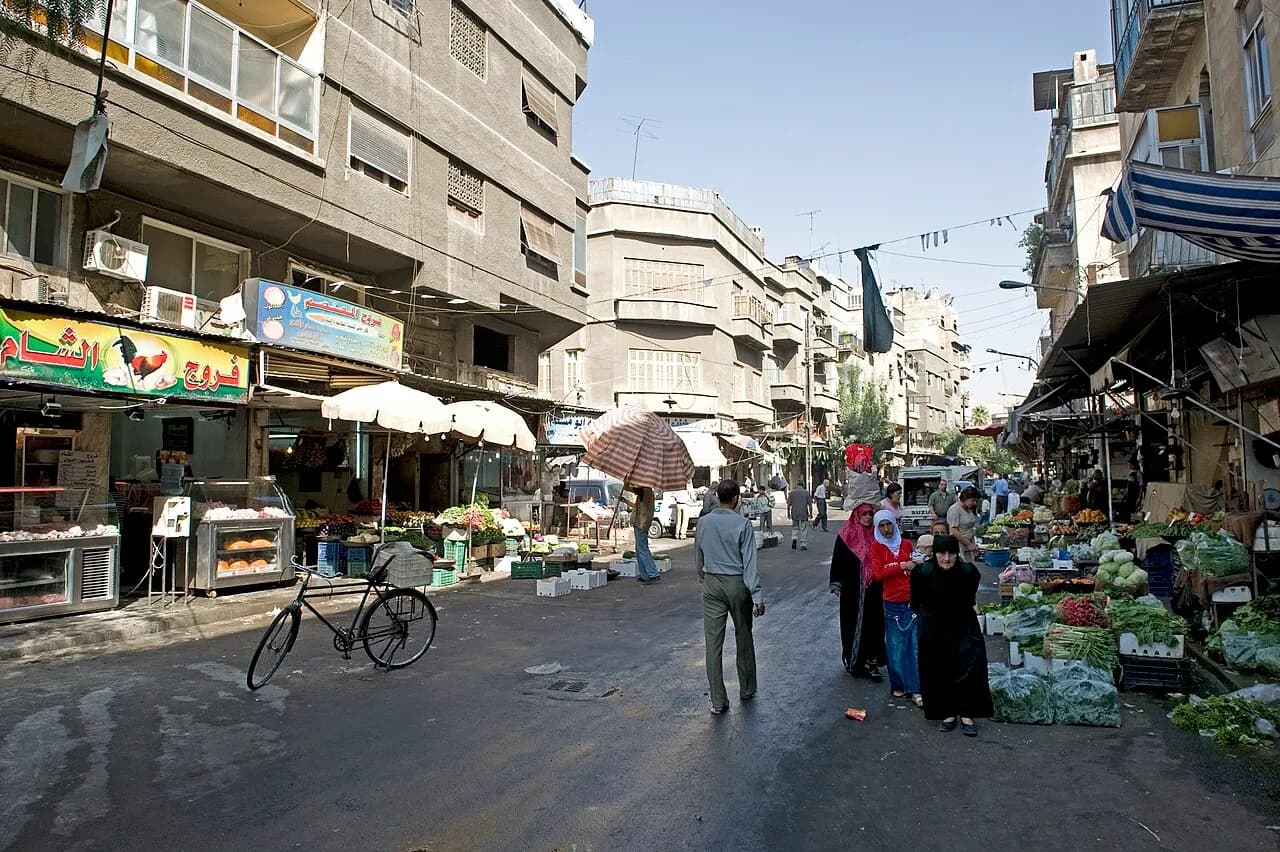

Keep measurements tied to their purpose
Measure only what helps answer a clear question. A doorway width can show whether furniture might pass; it cannot establish a parcel boundary. A tape measurement along a fence may help a surveyor understand your concern; it is not a cadastral measurement. Record the start and end points, the tool used and any obstruction. If someone else gives a number, note who supplied it and whether it came from a plan, a listing or a fresh measurement.
Ask a qualified local survey professional what site inspection or mapping work is appropriate if a line, area or access width matters to your decision. Ask your lawyer how that technical work should be compared with the property records. Keep the two roles distinct: a survey can describe physical conditions, while the legal significance of records and agreements needs legal review. The RICS consumer guide to boundary disputes is written for England and Wales, not Syria, but illustrates why physical features and documentary interpretation can require specialist evidence. It supplies no Syrian rule or procedure.
Ask about neighbours and shared arrangements without treating stories as proof
If a neighbour says a passage is private, or a seller says everyone has always used a roof, write down the statement and its date. Avoid putting the neighbour in the position of deciding your purchase. Ask the seller for the document or other evidence that supports the offered arrangement, and give any conflicting accounts to your lawyer. If access depends on a gate controlled by another household, ask how that arrangement is meant to continue after transfer and what happens if the gate is locked.
Shared maintenance is a separate issue. Who currently pays for lighting, cleaning, repairs or a gate mechanism? Is there a written arrangement or only a practice? Record the answer, but do not infer an enforceable obligation from an informal payment history. If a stair or retaining wall looks damaged, seek an independent condition assessment. A boundary question and a safety question may arise from the same structure but need different evidence and advice.
Make discrepancies visible before the contract stage
Create a three-column record: offered feature, observation, and document or professional check needed. For example: “parking space included” may sit beside “space shown during viewing,” with a third column asking which record identifies the space and how vehicles reach it. Another row might compare “private courtyard” with a gate used by two units. Add the source and date of every claim. This is more useful than a single note saying “boundary to check.”
If the plan, seller's account and physical layout disagree, ask your advisers what additional evidence would resolve the difference and what would remain uncertain. Do not fill the gap with a verbal promise to move a fence or grant access later. Our seller authority guide helps identify who is making such a promise and whether that person is the proposed signatory. Authority to speak for a neighbour or co-owner should itself be checked.
Give the advisers a precise decision question
Send your lawyer the original listing, property records supplied, site photographs, sketches clearly marked as observations, measurements with methods, and a list of claimed routes and spaces. Ask what the proposed contract would transfer, what access would accompany it, and what cannot yet be confirmed. Ask the survey professional to describe any physical mismatch without assuming its legal result. If the answer changes the size, usability or access of the property you thought you were buying, reconsider the offer before any reservation or signature.
The practical goal is not to draw a perfect line yourself. It is to prevent a buyer from paying for an advertised space or route whose status has never been established. A clear record of what was seen, who made each claim and which document was checked gives the right professionals a chance to answer the real question.
Continue your research

Preparing a Property Document Translation Brief
Prepare a property document translation brief for Syria: identify the source version, intended use, names, numbers, unclear passages and delivery checks.
Read more
Checking Whether Parking Is Included in a Property Purchase
Check what parking a Syrian property purchase includes: identify the claimed space, link supporting records and resolve allocation, access and proposal differences.
Read moreSources & review
Last reviewed:
PUT YOUR RESEARCH TO WORK
Start with a place.
Explore Syria’s cities and narrow your property search.