About Syria
Reading the Difference Between a Historic Site and a Modern Neighbourhood
Distinguish heritage sites, building age and neighbourhood descriptions in Syria, using dated Damascus photographs and clear questions for an exact address.
In this article


A historic site and a modern neighbourhood describe different aspects of a place. One may refer to a defined heritage property; the other is often a loose description of buildings, streets or development. They can overlap. Before using either label to judge a potential home in Syria, establish the address, the area the description covers and the source behind it.
The distinction becomes useful when a listing says near the old city, beside a historic landmark or in a modern district. Each phrase raises a different question. Near requires a location and a route. Historic requires an identified subject. Modern needs an explanation of what is modern: the building, its finish, the street layout or simply the advertiser's impression. None of those words supplies the answers by itself.
Separate three meanings of historic
A building can look old, have a documented history, or fall within a defined heritage area. Those statements should be checked separately. A decorative stone doorway does not establish a date. A recognised monument nearby does not identify the status of every neighbouring parcel. A map of a large historical city may be useful orientation without being sufficiently detailed for a property question.
The UNESCO record for the Ancient City of Damascus gives the name, significance and documentation of an inscribed urban property. Use the entry's maps and documents to understand what is being described. If your question concerns a particular house, its identity and applicable requirements need building-specific evidence and appropriate local advice. Do not interpret a general web map as a title record or an authorisation for work.
Our introduction to Syria's World Heritage entries explains why a site name can encompass much more than its best-known monument. Keeping that scale in mind is the first safeguard against a misleading comparison.
Ask what modern actually describes
Imagine two advertisements. One calls a recently repainted apartment modern, while the other describes a broad road and newer-looking blocks as a modern neighbourhood. The first statement concerns appearance inside a unit; the second concerns its surroundings. Neither gives a construction date or establishes the condition of services. These are hypothetical examples, not descriptions of properties offered here.
Turn each adjective into a question that can be answered. What is the documented age of the building? Which works were completed, and when? Does a stated upgrade apply to the unit, the common areas or the whole block? If the answers remain vague, record the description as unverified rather than treating the label as a benefit.
You can appreciate a contemporary interior while still needing a survey or other competent assessment. Equally, an older exterior may conceal several later changes. A comparison becomes clearer when it names the actual feature you value, such as a usable room arrangement, instead of relying on a period label.
Compare streets at the same scale
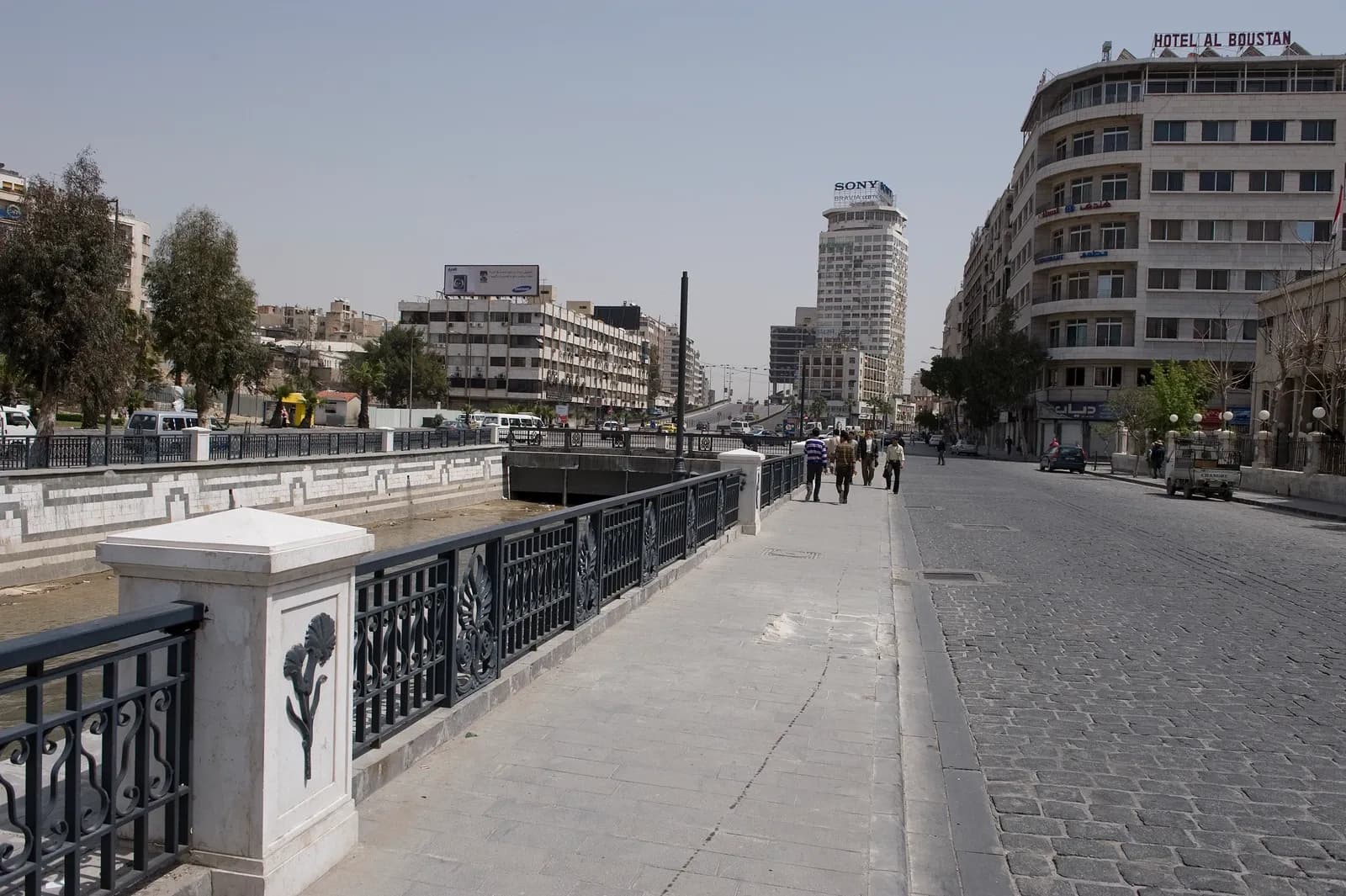
The photographs on this page show an entrance and flower-strewn paving near Khalid al-Azm's house in Old Damascus in November 2020, and a broader view of Shoukry al-Quowatly Street in April 2009. They record different subjects at different scales. They are not a current comparison of neighbourhood quality, services or access.
Notice which part of each image is visible. The broad street view includes carriageway and adjoining blocks; the close entrance view concentrates on paving, a doorway and surrounding details. Neither supplies the missing view of the other setting. Ask for comparable evidence when assessing homes: street against street, entrance against entrance and room against room.
The guide to Damascus through its historic centre provides urban context. Keep the dated setting in that guide separate from the evidence you collect about the address you are considering now.

Locate the home, its entrance and the landmark separately
A pin labelled with a landmark may draw attention to a listing while leaving the actual entrance uncertain. Write down both positions. Then establish the permitted route between them using current information. A straight-line distance does not tell you whether the relevant gate or street connection can be used, or whether it suits the household's needs.
This is especially useful when a building has more than one entrance, when the advertised district name is broad, or when a landmark lies on the other side of a major road. Confirm the street and building identity through appropriate documents and a reliable local contact. Do not share private ownership documents publicly to resolve a mapping question.
For architectural context, traditional courtyard houses show why the street face alone may say little about spaces beyond an entrance. A location description and a building description belong beside each other in the research, each with its own evidence.
Test the description against your intended use
For someone interested in architectural study, proximity to an identified historic setting may be central. For a household choosing a daily base, the more immediate questions could concern the trip to school, shopping and an accessible entrance. Those priorities can coexist. They should be written down before an appealing image determines the shortlist.
Make two short notes for each candidate. The first covers the cultural setting: named place, source and scope. The second covers the home: exact address, relevant features and unresolved practical questions. If the first note is detailed and the second nearly empty, you have researched the attraction more thoroughly than the proposed home.
Avoid translating heritage interest into an assumed rental premium, resale advantage or visitor demand. Such claims need separate, current evidence. Likewise, a district's description as modern should not become a prediction about maintenance costs or comfort.
Use a more precise shortlist description
Replace a broad label with a sentence you can support. For example: the advertised address needs confirmation; an identified historic landmark is shown nearby on the cited map; building age and the usable route remain unanswered. A different candidate might have documented alteration dates but little information about its surrounding streets.
That wording may be less dramatic than historic charm or modern convenience, but it makes the next action obvious. You know which fact to confirm and which comparison still cannot be made. Once the address, building evidence and everyday arrangements are clear, the historic or modern setting can become a meaningful preference rather than a substitute for research.
Continue your research

Syria UNESCO World Heritage Sites: An Introduction
Explore Syria’s six UNESCO World Heritage entries, their inscription dates and scope, with real archive photographs and links to the official records.
Read more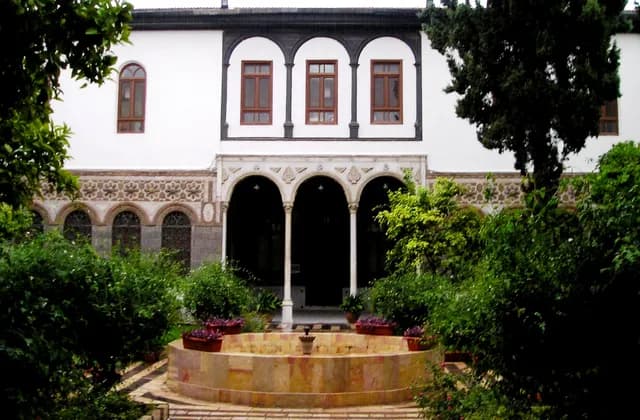
Stone, Courtyards and Shade in Syrian Architecture
Read Syrian architecture through real Damascus photographs, observing courtyard surfaces, patterned walls and shade without assuming building condition.
Read moreSources & review
Last reviewed:
PUT YOUR RESEARCH TO WORK
Start with a place.
Explore Syria’s cities and narrow your property search.