Blog
How Exchange-Rate Changes Affect Property Comparisons
Compare property quotations over time by preserving currencies, dates and rate assumptions, with a clearly fictional example and practical budget questions.
In this article


You saved a property advertisement last month and opened it again today. Its quoted price looks unchanged, yet your spreadsheet shows a different amount in the currency you use for your budget. Before describing the home as cheaper or more expensive, check what actually changed: the seller's figure, your conversion rate or both.
Exchange-rate movements can alter a comparison without any change to the underlying property quotation. They can also conceal a change when quotations in different currencies move at different times. A useful comparison keeps the original price, the observation date and the conversion assumption together. The result is an analytical estimate, not a promise about the amount or method of payment.
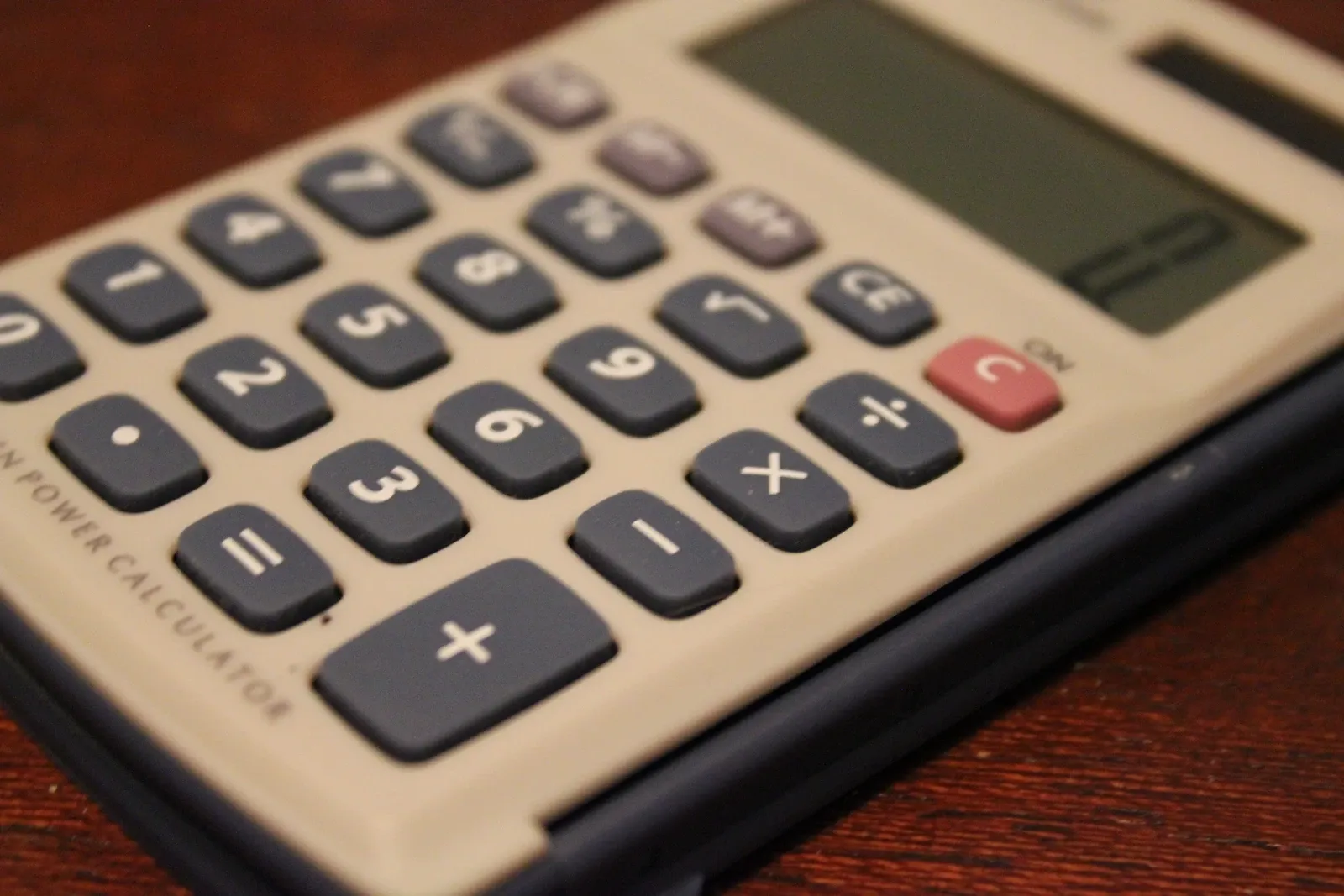
A Homs shopfront photograph from October 2010 provides dated urban context. The calculator photograph is illustrative, with no verified Syrian location or financial data. Neither image records an exchange rate or property transaction.
Preserve the quotation before converting it
For each property, record the exact quoted currency and amount, the date you obtained it and the source. If the advertisement gives an approximate equivalent in another currency, keep that separately. Ask which figure the person making the quotation intends to use in a proposed agreement; do not silently choose whichever version is more convenient.
The same discipline applies to a second viewing or a revised offer. Save the new quotation alongside the earlier one, with an explanation of any changes to the property, included items or terms. A currency comparison cannot resolve whether a renovation, different payment schedule or excluded fixture accounts for part of the difference.
Our handbook on comparing property prices quoted in different currencies covers the transaction brief. This article focuses on how a changing conversion assumption affects comparisons over time.
Describe the rate you are using
A rate must have a direction. Writing “50” is incomplete; writing “50 units of Currency B for one unit of Currency A” makes the calculation reproducible. Record the provider, observation time and whether the number represents a particular date or an average over a period.
The Bank for International Settlements' statistics overview distinguishes bilateral exchange rates from effective rates against a basket of currencies. They measure different things. An index describing a currency relative to a basket is not the two-currency rate required to convert an individual property quotation. This is a general statistical distinction, not a recommendation of a payment provider or a current Syrian rate.
Whatever your analytical source, check separately what a lawful, available transaction would require. A displayed reference rate alone does not establish the rate, fees, timing, eligibility or currency that would apply to your arrangement. Obtain current guidance from appropriately qualified independent advisers and the relevant provider before making a payment commitment.
See the arithmetic in a deliberately fictional example
Imagine a quotation of 100 units of Currency A. At an assumed rate of 40 units of Currency B for one unit of A, its converted value is 4,000 units of B. At a later assumed rate of 50, the same quotation converts to 5,000 units of B. The original price in A has not changed.
Now imagine that the quoted price falls from 100 to 90 units of A while the assumed rate rises from 40 to 50. The equivalent in B changes from 4,000 to 4,500. Calling the quotation simply “lower” omits the currency in which that statement is true.
These numbers are invented to demonstrate multiplication. They are not Syrian prices, exchange rates, forecasts or evidence that any payment can be completed on these terms. Their practical lesson is to label every comparison with its currency and date rather than turning a converted spreadsheet result into a market claim.
.jpg)
Use two views of the same comparison
For a shortlist taken on different dates, one view can show each quotation with the conversion assumption recorded when you first observed it. This preserves the history of your own budget estimate. A second view can apply one common analytical rate to all original quotations, making the currency conversion consistent for that comparison.
Label the second view as a common-rate scenario. It does not recreate a historical transaction or predict a future one. It helps isolate the effect of your conversion choices while leaving differences between the properties visible.
Keep the original quotations available beside both views. If a property was repriced, use its revised amount and date in a separate row. Otherwise an old quotation may look like a current alternative simply because the conversion was refreshed. Our article on reading a property market report explains why the observation period remains part of the evidence.
Keep the whole budget in view
A purchase quotation is only one part of a proposed commitment. Repairs, professional work, running costs and other items still requiring verification may be quoted in different currencies or on different dates. Record the currency for each item before adding them together in a budget view.
Use the same stated conversion basis where that is appropriate for analysis, and mark provisional costs clearly. Leave room for assumptions to change. If an unknown expense is entered as zero, changing the exchange rate will not reveal the missing cost.
For a household with resources in more than one currency, identify which resources would be available when needed. Having a converted total on paper does not establish access to funds at a particular time. Do not assume borrowing, transfers or exchange arrangements are available without checking the applicable current requirements and provider terms.
Avoid turning a currency move into a property conclusion
A currency movement may change what a quotation looks like to different readers. It does not, by itself, establish a completed sale, a change in building quality or the return a future owner could achieve. Those questions need evidence about the property and the relevant arrangement.
The distinction between asking prices and completed sales still applies after conversion. A perfectly calculated equivalent of an asking price remains an asking-price equivalent.
Before acting, explain the change in one precise sentence: the original quotation changed, the conversion assumption changed, or both changed. Then identify what remains uncertain about the property's condition, costs and proposed payment terms. That short explanation makes your comparison easier to challenge and far more useful than an unsupported claim that the market has become cheap or expensive.
Continue your research

Infrastructure Announcements: What Property Buyers Should Verify
Check infrastructure announcements in Syria by verifying sources, project stages and locations before drawing conclusions about services at a specific home.
Read more
Distinguishing Housing Need from Investment Demand
Distinguish housing need from investment demand in Syria by examining household suitability, affordability and evidence about the proposed property.
Read moreSources & review
Last reviewed:
PUT YOUR RESEARCH TO WORK
Start with a place.
Explore Syria’s cities and narrow your property search.