About Syria
How to Research Schools Near a Potential Home
Research schools near a potential Syrian home by confirming identity, the current enquiry process and the journey, with dated photographs and UNICEF context.
In this article


Research a school near a potential home by confirming three things separately: the institution's identity, an education option appropriate to the child, and a workable journey from the actual home entrance. A nearby building labelled school on a map does not confirm an available place, the relevant age group or the arrangements that apply today.
For families comparing homes in Syria, this work should happen before school proximity becomes a deciding advantage. It can be done in stages, beginning with general enquiries and moving to personal documentation only through the institution's appropriate process. This guide offers questions to organise that research; it does not prescribe Syrian admission rules or endorse an individual school.
Give the enquiry enough context without oversharing
Begin with the intended academic year, the child's current learning stage and the broad support needs you wish to discuss. If schooling has been interrupted, ask how the institution assesses the next step. Do not assume that an age alone establishes the appropriate class or that a previous placement automatically transfers.
At this stage, ask who handles admissions or placement enquiries and which communication channel is official. You can establish the process before sending sensitive records. Avoid posting names, identification documents, addresses or detailed learning histories in public neighbourhood groups to request recommendations.
Write down the questions that will affect your home choice. These may include whether the institution offers the relevant programme, whether an application can be considered, and when an answer might be available. A promise from an unrelated property advertiser is not the institution's confirmation.
Confirm the institution, not only its name on a map
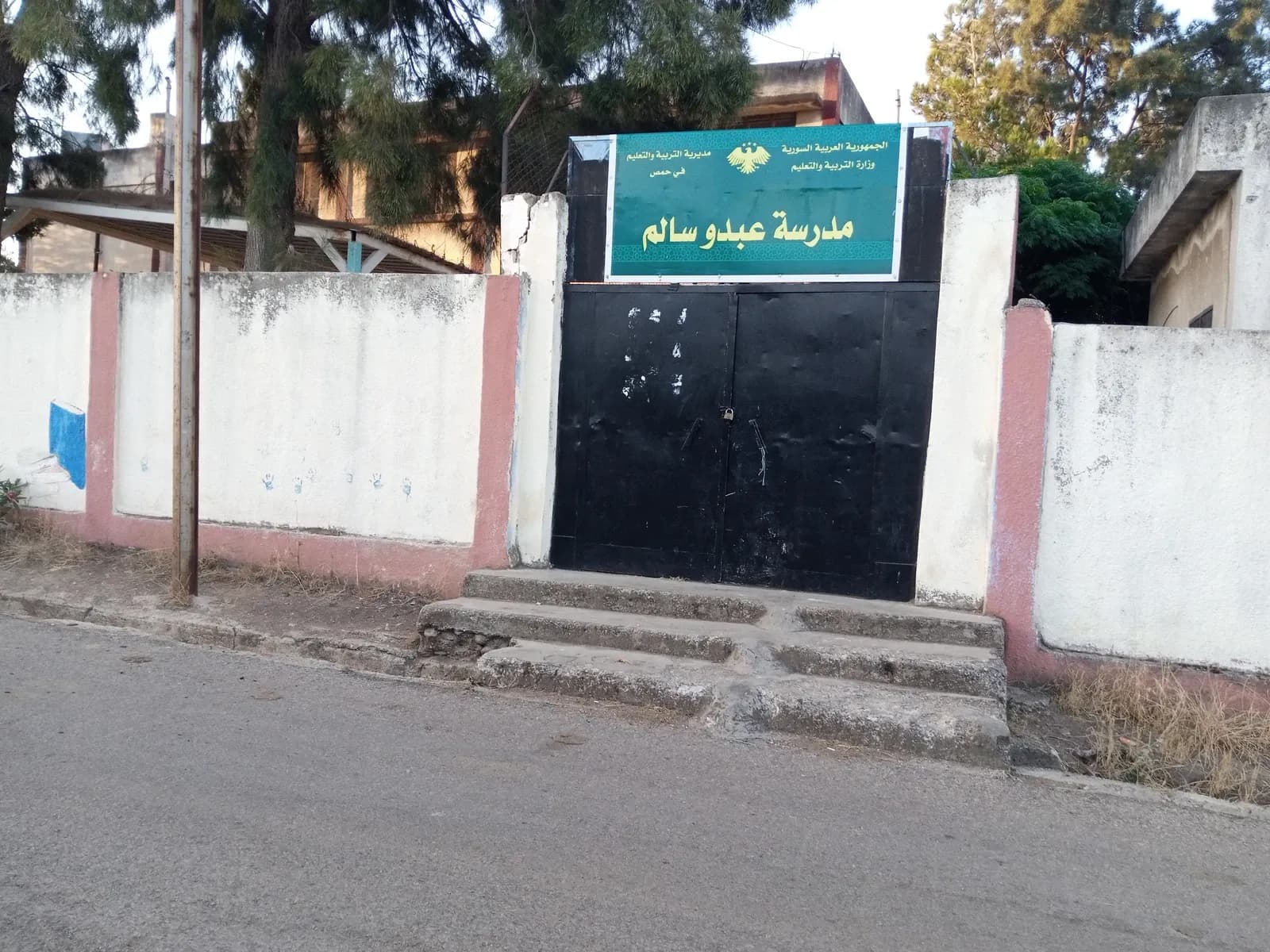
Schools can be known by more than one spelling or a familiar local name. Confirm the official identity, current location and the entrance used by the relevant pupils. If several institutions share a site or a name resembles another nearby school, clarify which one your contact represents.
The archive photographs on this page identify school buildings in Syria through their source records. They establish the photographed subject at the recorded time, not present admissions, facilities or educational performance. A building image can help you recognise a name while still leaving the practical enquiry incomplete.
UNICEF's Syria education programme page describes access challenges and work on school rehabilitation, teacher support and learning opportunities. This national context is a reason to confirm details locally, not a means of judging a particular school's current provision.
Ask for the current process and its limits
Request the institution's current requirements, relevant dates and the person responsible for answering further questions. Ask whether the reply describes an application opportunity, a waiting arrangement or a confirmed place. Keep those distinctions visible in your notes.
If documents are requested, obtain the exact list and submission method directly. A returning family may need to discuss previous records or interrupted schooling; the answer should come from the appropriate education contact. This article does not establish equivalence, acceptance criteria, compulsory paperwork or a right to a particular placement.
Where charges or additional costs are relevant, ask for an itemised explanation from the responsible institution and confirm the period it covers. Do not rely on an old online fee figure or infer costs from the building's appearance. Keep the educational decision separate from the property seller's interests.

Discuss the child's learning experience
Ask about the programme offered, language arrangements, teaching schedule and how additional needs are considered. A useful conversation should address your child's situation rather than general promotional claims. If the institution offers an appropriate visit, use it to understand the spaces and arrangements you have discussed, following its permission and privacy rules.
Look for specific answers about communication with families and how questions or concerns are handled. Ask what support can actually be provided, and which needs require a separate discussion. Avoid interpreting a friendly first call as a commitment to services that have not been confirmed.
In a September 2026 UNICEF account of a school in Jaramana, rehabilitation included work on damaged facilities and the learning environment. That is an identified example at a dated location. It does not establish that similar improvements have occurred at every school you might enquire about, or that one photograph can demonstrate accessibility throughout a campus.
Check the journey at the right scale
Start at the proposed home's doorway and finish at the confirmed pupil entrance. Consider who accompanies the child, the times involved and any transfers or waiting arrangements. Obtain current information about the route and transport you intend to use. A short distance on a screen may still leave important questions about the real journey.
Ask how arrival and collection work at the institution. If someone else may collect the child, clarify the school's own arrangements directly. Do not invent a procedure based on practices at another school or in another country. Weather, timing and household responsibilities can be considered as planning scenarios without assuming a route will always perform the same way.
The guide to defining your property brief helps make this a household requirement rather than a vague preference for being near schools. Apply the same requirement when comparing more than one home.
Keep the evidence in a family decision record
For each institution, note its identity, the date and source of the reply, what was confirmed and what still requires a decision. Keep any personal records securely and share only what the appropriate recipient needs. For the home comparison, a brief summary of the outcome is often enough; the property shortlist does not need to reproduce the child's documents.
Use the shortlisting framework to flag unresolved schooling questions. If you are researching from abroad, organising a property viewing trip can help sequence permitted appointments without assuming that a viewing visit also resolves admission.
The goal is a clear answer you can use: an identified school, an understood process or confirmed outcome, and an examined journey. Until those parts are known, proximity remains a research lead. Treating it that way gives the family room to ask better questions before choosing a home.
Continue your research

How to Check Local Services Before Relocating
Check local services before relocating in Syria by identifying providers, confirming current arrangements and researching usable connections from the home.
Read more
Seasonal Comfort: Questions to Ask When Viewing a Home
Ask useful questions about sunlight, shading, windows and equipment at a Syrian home viewing, separating observations from untested seasonal comfort claims.
Read moreSources & review
Last reviewed:
PUT YOUR RESEARCH TO WORK
Start with a place.
Explore Syria’s cities and narrow your property search.