About Syria
Homs: A City Guide for First-Time Property Researchers
Explore Homs through its streets, dated architecture photographs and urban research, then build an address-specific brief before comparing potential homes.
In this article

Homs is easier to understand when you separate three things: the city you are exploring, the neighbourhood around an address, and the building you might eventually consider. A familiar landmark can orient a search, but it cannot answer whether an apartment suits your routine. Start with a small, readable record of places and routes. Then add current evidence for each candidate home. This guide introduces a way to read Homs through its streets and older urban research without turning an archive photograph into a promise about life there today.
Find your bearings at the right scale
“Homs” in a search result may mean the city or the much broader governorate. Before saving an attractive property, ask for the settlement name, Arabic address, building entrance and a precise map pin. Check whether the description actually places it inside the city. A landmark somewhere in the governorate is not a useful substitute for the location of the door you would use every day.
Within the city, keep the neighbourhood name and the address together. English spellings vary, so retain the Arabic wording supplied with the listing and ask a local contact to confirm it. Give your location note a date. A pin can be misplaced, a photograph can be forwarded without context, and an advertisement can use a recognisable district name more broadly than you expect. Resolve those differences before comparing homes on price or room count.
The UN-Habitat Homs City Profile, prepared in May 2014, offers an older city-scale starting point. Its neighbourhood map and discussion of urban services show why housing research needs more than a city name. The assessment was produced for humanitarian and recovery work during that period. Its population estimates, damage maps and service findings are historical evidence, not a current district ranking or a guide to today's asking prices.
Look at buildings as well as monuments
For a property researcher, an ordinary street photograph can be more informative than a postcard view. Look for how upper floors meet the street, whether balconies project over a pavement, and how entrances relate to ground-floor shops. These features help you form questions about an actual building. They do not establish its construction quality, legal use or present condition.
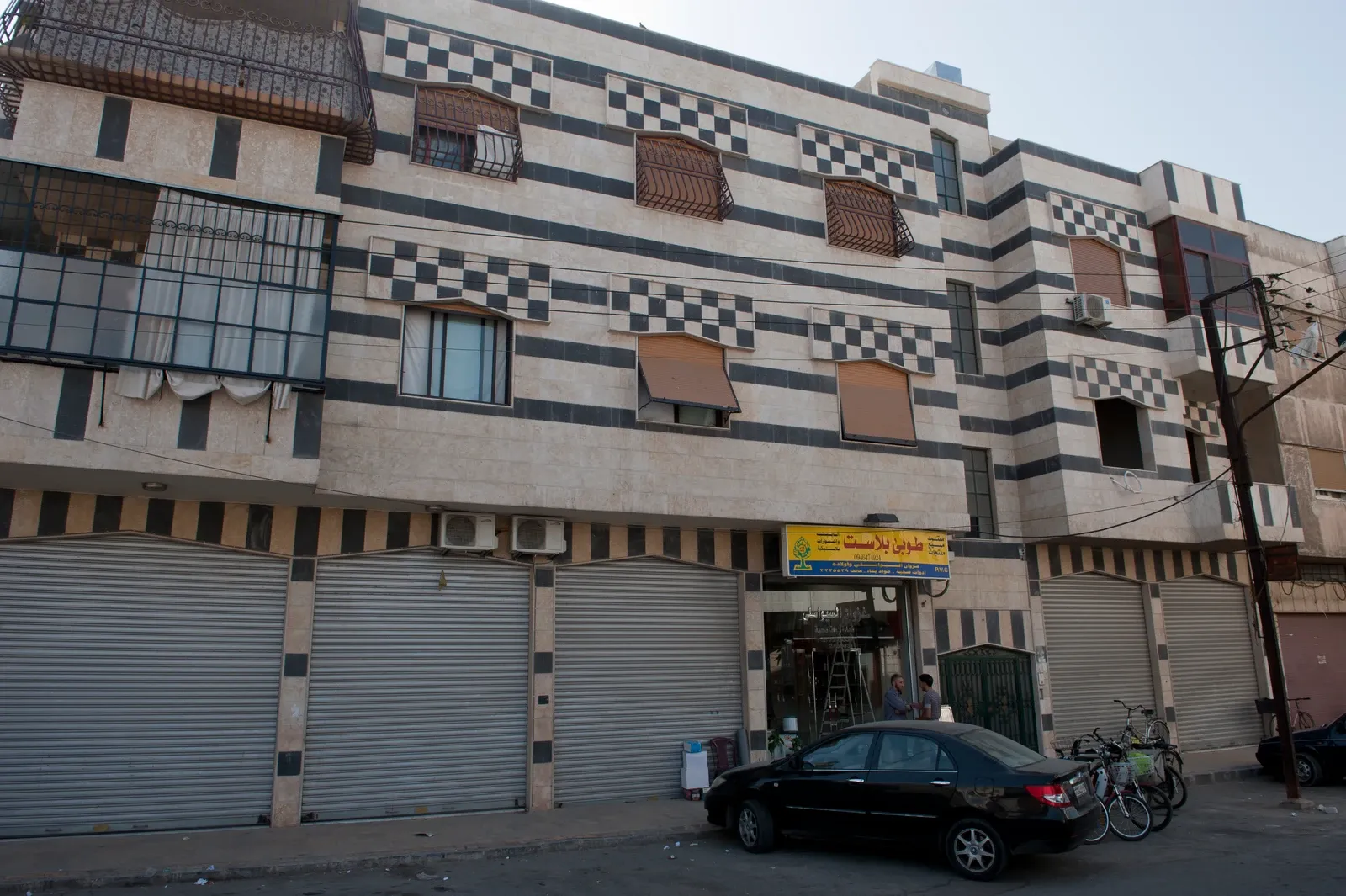
The 2010 photograph accompanying this guide shows a striped facade, enclosed window grilles and commercial frontage in Homs. Notice the difference between the frontage you can see and the entrance arrangements you cannot. If you were considering a home in a similar street, you would ask which door serves the apartment, where shared stairs begin, and what occupies the ground floor now. The archive image records one building at one time; it identifies no available property.
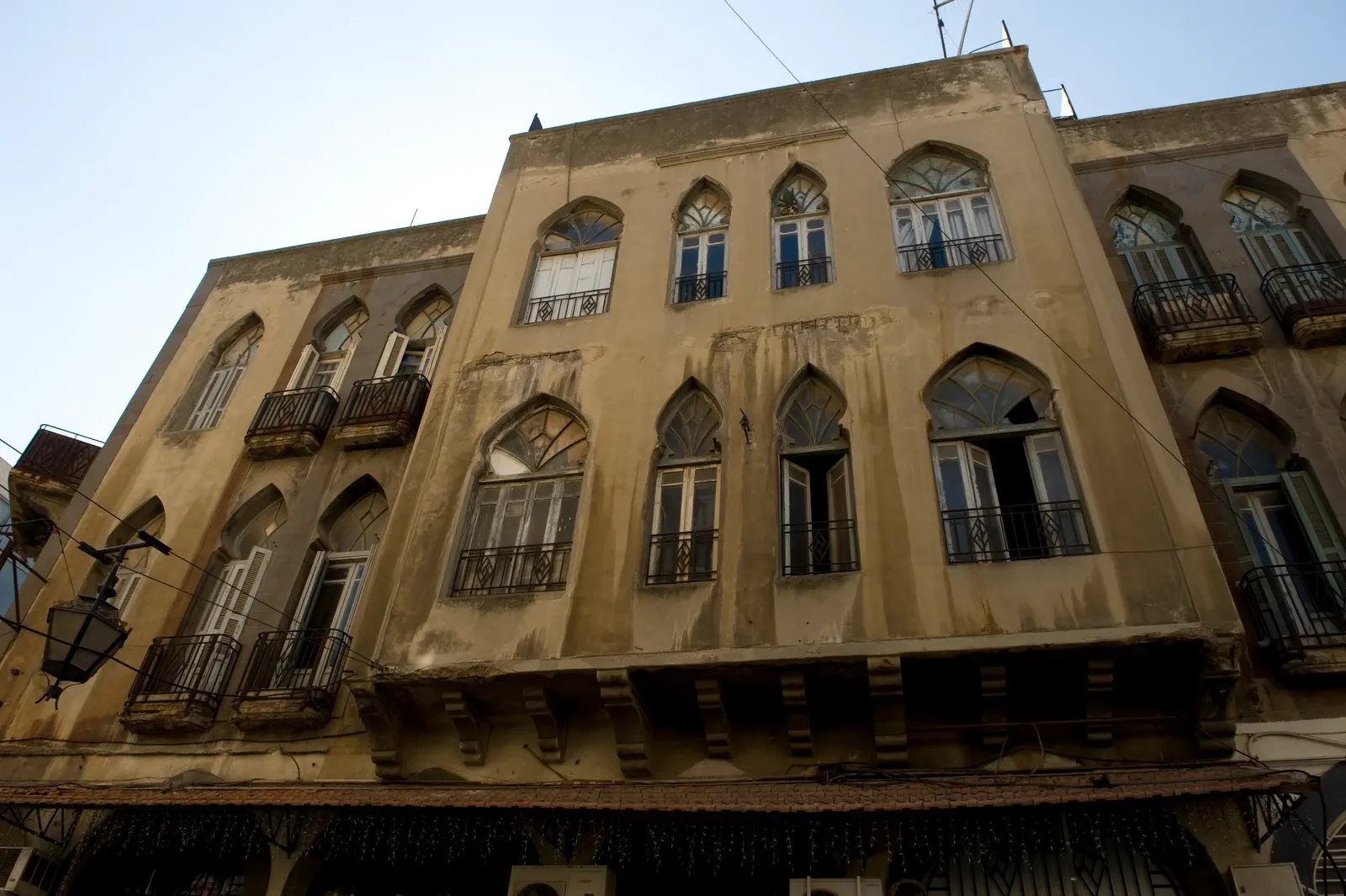
Our second photograph, taken in 2008, records arched windows and small balconies on another Homs facade. It is useful for looking closely at architectural detail rather than assuming all housing has one character. Neither the appearance of older masonry nor a decorative window tells you whether a building needs repairs. An independent inspection must address the specific structure and any proposed work. Keep aesthetic preferences separate from condition findings in your shortlist.

Read the Old City record carefully
UN-Habitat's Old City neighbourhood profile narrows the focus to nine Old City neighbourhoods and three adjacent neighbourhoods. It builds on the May 2014 city profile. That change of scale matters: even a substantial city report cannot describe every street or individual dwelling. The profile was a snapshot for humanitarian planning, and its findings must remain attached to their period.
Use the report to recognise the kinds of questions that connect housing with the surrounding urban area. For a current address, investigate the approach to the entrance, shared spaces, nearby activity and services separately. Do not transfer a historic description of damage or displacement to a different building offered now. Likewise, a report about recovery work elsewhere in Homs cannot certify that work has been carried out in the property you are researching.
If a description invokes an old quarter or a historic building, ask exactly what the claim refers to. Request the address and relevant records, and have a qualified local adviser investigate any requirements affecting the building or alterations you intend. This guide supplies orientation; it does not identify a property's ownership, permissions or structural suitability.
Sketch one ordinary week
Choose the destinations that would shape your life in Homs before deciding which location looks attractive. They might include relatives, work, regular appointments or places you need to reach with children or an older family member. Put these on a simple map alongside each candidate address. Record the route you would actually use, rather than measuring only the distance between two pins.
Ask someone who knows the address to describe the final approach. Is the entrance reached from a main street or a smaller passage? Where does a vehicle stop? How many steps come before the lift or apartment door? Request a dated street-level view that begins outside and reaches the actual entrance. If access is essential to your household, an attractive interior video cannot settle it.
Check any named shop, school or service directly for your intended need. A map marker establishes where something is labelled, not its current operation or suitability. For water and electricity, record the arrangements reported for the exact building, who maintains shared equipment, and what still requires independent checking. The building services guide helps organise that conversation without making city-wide promises.
Leave your first research session with a useful brief
At the end of an initial search, aim for a short list of addresses you can explain, not a long folder of anonymous photographs. For each one, retain the Arabic name, pin, entrance image, photograph dates and two routes that matter to you. Add what you liked about the setting, what someone else reported, and the specific questions that remain open. A missing answer is useful information when it is recorded clearly.
Next, convert those location notes into a property shortlist. Compare the home with your intended use and budget, then use the viewing checklist to examine the rooms and shared areas. Homs provides the setting. The evidence for the particular home must still come from that home, its records and the independent checks appropriate to your decision.
Continue your research
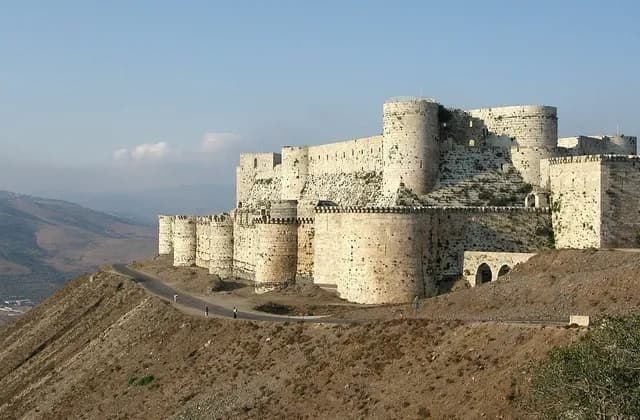
Homs Governorate: Separating City and Regional Research
Separate Homs city from governorate research with clear place names, dated regional photographs and practical ways to check the scope of your sources.
Read more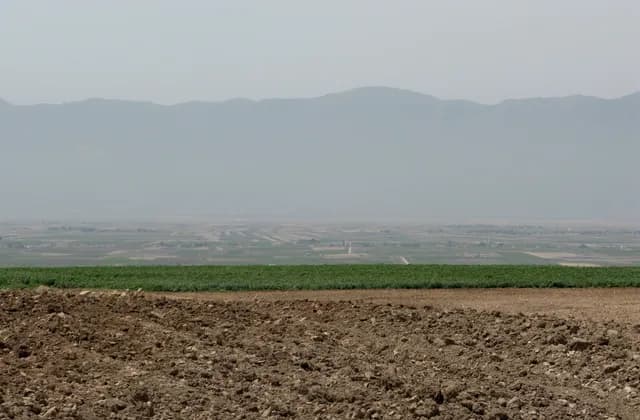
The Orontes Valley: Reading Central Syria Geography
Read the Orontes Valley through basin maps, dated landscape photographs and clear geographic scope before researching a specific place in central Syria.
Read moreSources & review
Last reviewed:
PUT YOUR RESEARCH TO WORK
Start with a place.
Explore Syria’s cities and narrow your property search.