About Syria
Comparing Neighbourhoods for Everyday Life in Syria
Compare Syrian neighbourhoods through household routines, confirmed entrances, essential services and dated evidence, with genuine Damascus archive photographs.
In this article


Compare neighbourhoods through the ordinary week your household needs to manage. Begin with the exact homes under consideration, then examine the journeys, errands and access arrangements that connect them to daily life. A district reputation or an attractive street photograph can introduce a place, but it cannot tell you whether a particular address works for you.
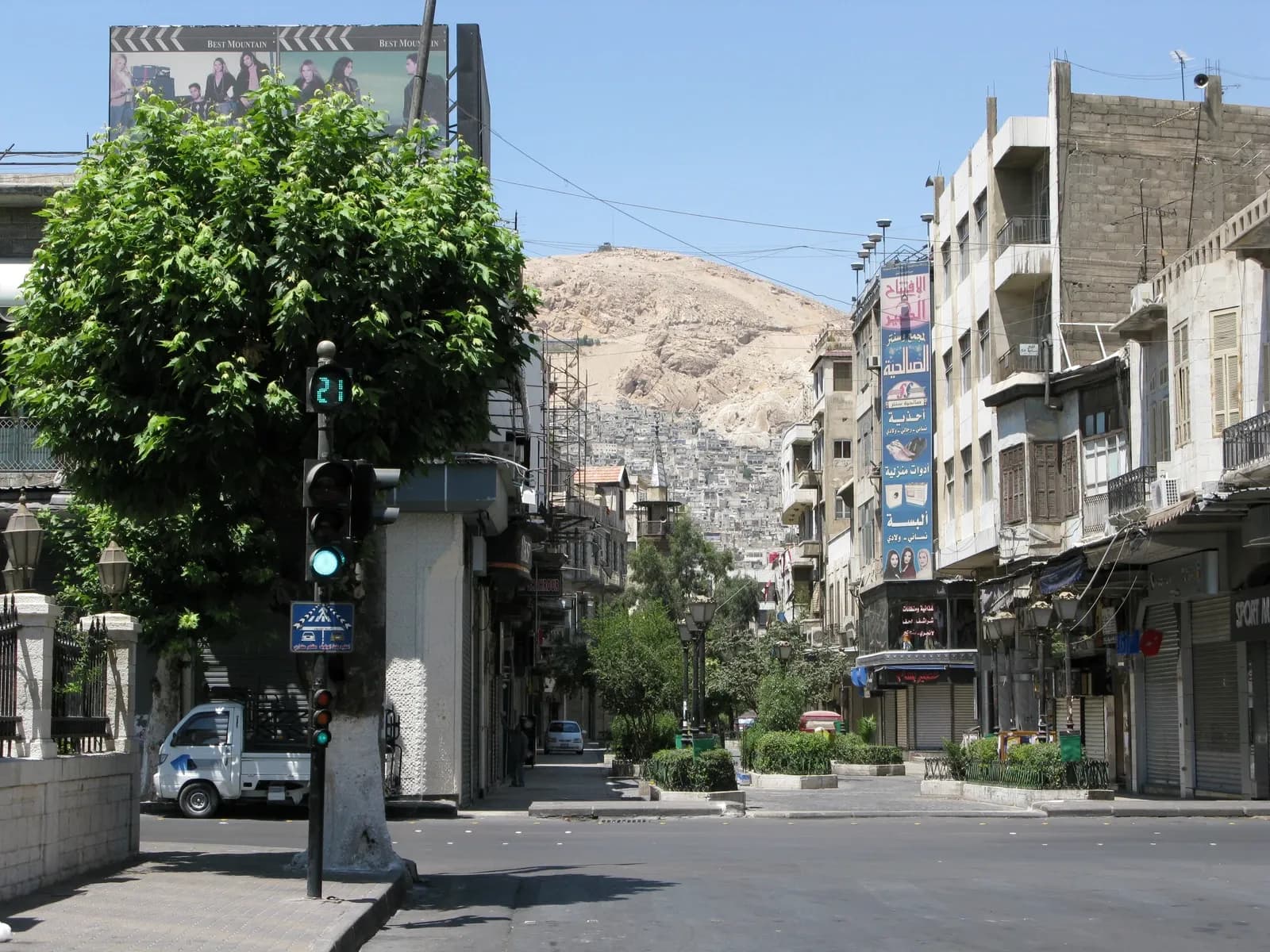
This guide helps turn broad preferences into a comparison you can use. It does not rank Syrian districts or claim that a photographed street has current services. The two archive Damascus views illustrate different street settings in 2008 and 2009. Today's service availability and route conditions require fresh information from the people responsible for them.
UN-Habitat's Urban Profiling Toolbox describes urban analysis drawing together several sectors and sources. That work offers an area-level framework; a household comparison needs narrower questions about a particular address and its daily connections.
Write down an ordinary week before scoring an area
List the activities that repeat most often: work, school, essential shopping, family visits and any regular appointments. Include who makes each trip and whether they travel alone or with someone else. A journey that suits one adult may not suit a child, an older relative or a person who needs step-free access.
Distinguish essential requirements from preferences. An entrance a household member can use independently may be essential. A favoured type of café could be a preference. Writing that distinction early prevents a pleasant amenity from compensating on paper for a requirement that the home does not meet.
Start with a clear property brief if the household has not yet agreed on those priorities. A neighbourhood comparison is easier when you know what the home is expected to support.
Use the entrance as your starting point
A district centre is rarely the point from which your daily journey begins. Find the actual entrance, including the route through common areas where relevant. Note what must happen before you reach the street: stairs, a shared passage, a gate or another arrangement requiring confirmation.
For each repeated destination, record the entrance-to-destination route and what remains unknown. A map estimate can help organise questions, but it is not a tested travel time. Where appropriate and safe, gather current observations for the relevant time of day from a permitted visit or a trusted local contact. Do not treat a single convenient journey as a complete weekly pattern.
This avoids a familiar mistake: comparing one home from its own doorway and another from a nearby landmark. Use the same starting point and method for every candidate. Otherwise, the apparent difference may come from the research rather than the neighbourhood.
Examine essential services as usable options
A shop symbol on a map is a possible lead. Establish what the place offers, whether it currently operates and whether the route and opening arrangements match your needs. For essential services, keep the source and confirmation date. A photograph of a frontage cannot confirm stock, hours, suitability or reliable access.
Think about a practical alternative where the household needs one. If your only identified option is unavailable, what would the next arrangement involve? This is a planning question, not a claim that services will fail. It helps expose reliance on an assumption before a moving decision makes that assumption expensive to resolve.
School and health-service questions need direct confirmation appropriate to the institution. Keep personal needs private when making initial enquiries. You can ask about access or available services without posting family records in a public group.

Record changes without turning them into reputations
An observation should describe the place and moment concerned. For instance, a vehicle queue at one junction during one visit gives you a reason to ask about that journey at other times. It does not prove that the entire district is always congested. Similarly, a quiet side street on a particular afternoon does not establish its evening conditions.
The archive images here show buildings, road space and adjoining frontages in central Damascus. They are useful for practising precise descriptions, not for rating present neighbourhoods. Avoid labels such as peaceful, family-friendly or well served unless the claim is explained by current, relevant evidence and its limits are clear.
When researching unfamiliar place names, the Damascus historic-centre guide can help establish context. Apply the same habit elsewhere: orient yourself in the city, then investigate the particular address and its daily connections.
Keep the comparison small enough to understand
Choose a few household requirements and make the same note for each home: requirement, evidence, remaining question and next action. For a school journey, that might mean a named institution, a confirmed entrance and an unresolved admissions enquiry. For groceries, it could mean an identified option with opening hours still to check.
Do not give an unanswered question an average score merely to complete a table. Mark it unknown. You can then see whether one candidate looks stronger because it meets your needs or simply because more research has been done on it.
If you use numerical weights, make them your household's choices and explain them. They are not objective neighbourhood rankings. A weighted score cannot override a missing essential requirement or certify a route's suitability. The property shortlist guide offers a wider framework for keeping evidence and unresolved issues together.
Account for the home as well as its surroundings
Everyday convenience can be affected by the building itself. Ask about shared circulation, deliveries, waste arrangements and access responsibilities where these matter to your household. Confirm what is actually provided rather than assuming a district's amenities extend into every building.
Compare the same requirements across homes that otherwise interest you. A neighbourhood you enjoy may still contain a unit whose entrance or layout needs further investigation. Conversely, a promising unit should not hide unanswered questions about its journeys and essential services. Neither side of the comparison completes the other.
Decide which question will change the decision
Before adding another area to the list, identify the outstanding fact most likely to affect your choice. It might be a usable school place, a realistic work journey or a building-access arrangement. Resolve that question through a reliable source, then update the comparison with a date.
You will finish with a more useful result than a list of recommended neighbourhood names: a small set of addresses whose everyday arrangements have been examined against your own requirements. That is a sounder basis for deciding where to focus viewings and what to ask next.
Continue your research

How to Check Local Services Before Relocating
Check local services before relocating in Syria by identifying providers, confirming current arrangements and researching usable connections from the home.
Read more
Seasonal Comfort: Questions to Ask When Viewing a Home
Ask useful questions about sunlight, shading, windows and equipment at a Syrian home viewing, separating observations from untested seasonal comfort claims.
Read moreSources & review
Last reviewed:
PUT YOUR RESEARCH TO WORK
Start with a place.
Explore Syria’s cities and narrow your property search.