Blog
Economy and Housing
Economy and Housing helps readers examine Syria's economic news, reconstruction estimates and infrastructure announcements before making a property decision. Its starting point is the gap between a broad development and an individual home. A forecast, reconstruction assessment or infrastructure approval…
Read more
can be relevant context while leaving ownership, building condition, available services and the proposed transaction unresolved.
Use this section to decide what a source can support and which further question it suggests. The articles examine economic reporting, reconstruction estimates, housing need, currency comparisons and infrastructure announcements. They do not publish a proprietary price index, certify local conditions or promise returns. A useful housing decision requires a clear household brief and appropriately qualified independent checks.
Read a national figure with its definition
Before using a number, identify what is being measured. A cost estimate, annual economic flow, price index and count of people describe different subjects. Save the unit, period, geography and underlying definition with the figure. Removing those details can make an accurate statement misleading in a different context.
Consider the difference between an assessment of damaged assets and a budget approved to repair them. Both may involve currency amounts, but the first estimates a need while the second describes a financing decision. Neither establishes that work has been completed near a shortlisted building. The next useful enquiry concerns the particular programme, location and stage of delivery.
The World Bank's 21 October 2025 reconstruction release presents a nationwide assessment covering 2011–2024 and explicitly records uncertainty. That dated scope matters when interpreting its headline. It does not provide an apartment valuation or a promise about the price of homes near assessed assets. Keep its role as an aggregate research reference visible in your notes.
Keep a forecast separate from a result
Economic reporting can mix descriptions of a past period with expectations for a future one. Find the verbs used by the original publisher and preserve them. A forecast describes an expected outcome under an analytical framework; a realised result requires subsequent evidence. A revision may reflect new information rather than make the earlier release a current measure.
The World Bank's July 2025 economic release is useful as a dated example of a forecast publication. When reading it later, seek newer evidence before describing its outlook as the present situation. We use such references to illustrate careful reading, with their dates intact, instead of presenting an older estimate as the latest available statistic.
For a live home search, maintain a source note rather than a pile of detached percentages. Record the original publication, relevant claim, reporting period and the limit of its application. If the information has not been independently checked, leave that status visible. Uncertainty is part of the evidence, not a blank space that a confident adjective can fill.
Distinguish a household's needs from market conclusions
People's need for secure, suitable housing deserves careful attention in its own right. It does not establish the purchasing capacity, financing arrangements or willingness to pay of a particular group for a particular home. A population count alone cannot answer those questions, and a broad demand narrative cannot determine a suitable purchase amount.
Start with the household's actual requirements: usable space, access, location commitments and budget. Then examine the proposed property against those requirements. Avoid changing the brief simply because an economic story suggests that a region is attracting interest. The national context and the household's practical fit should remain legible as separate parts of the decision.
The same applies to an intended investment use. Investigate current permissions, terms, management responsibilities and evidence of actual operation through the appropriate advisers and sources. This category does not substitute a social need statistic for that research or interpret a humanitarian assessment as a commercial recommendation.
Read infrastructure through its delivery stage
An announcement can describe a proposal, financing approval, contract award, construction milestone or completed service. Ask which stage is documented and who published the evidence. A project's existence does not establish the exact route, connection or operating arrangement relevant to your shortlisted address.
For example, the World Bank country overview records approval of an electricity project in June 2025. Its value as context is the documented financing stage. A household still needs current building-specific information before relying on electricity arrangements for a move. Do not infer those conditions from a programme title or an illustration of a network.
Look for implementation documents where appropriate, and keep a dated record of the evidence you reviewed. If the source describes only a wider area, ask the responsible provider about the exact connection. If the answer is incomplete, make that uncertainty part of the comparison instead of counting an announced benefit as already available.
Use currency comparisons without losing the original terms
A planning conversion can help organise figures, but it must preserve the original amount and currency. Record the rate convention, source and date. A different conversion assumption can change a spreadsheet while leaving the underlying quoted amount unchanged. That arithmetic should not be mistaken for a change in the property's value.
Clarify the proposed transaction terms separately with the relevant professionals. A reference rate is not automatically an executable quote, an available payment method or the amount payable under an agreement. The Investment Handbook covers purchase-budget organisation; this section examines how economic news can influence the assumptions around it.
Choose a next action proportionate to the evidence
Finish reading with one practical question. A report might prompt you to request the original methodology, recheck a budget assumption or confirm the status of a relevant service. It need not prompt a transaction. If the link between the news and the proposed home is unclear, write that down rather than inventing a causal connection.
The purpose of Economy and Housing is to make context usable without giving it authority it does not have. Readers should leave with a clearer source record, a better-defined uncertainty and a sensible next enquiry. The property itself still needs to be identified, examined and reviewed on its own evidence.



Infrastructure Announcements: What Property Buyers Should Verify
Check infrastructure announcements in Syria by verifying sources, project stages and locations before drawing conclusions about services at a specific home.
Read more
How Exchange-Rate Changes Affect Property Comparisons
Compare property quotations over time by preserving currencies, dates and rate assumptions, with a clearly fictional example and practical budget questions.
Read more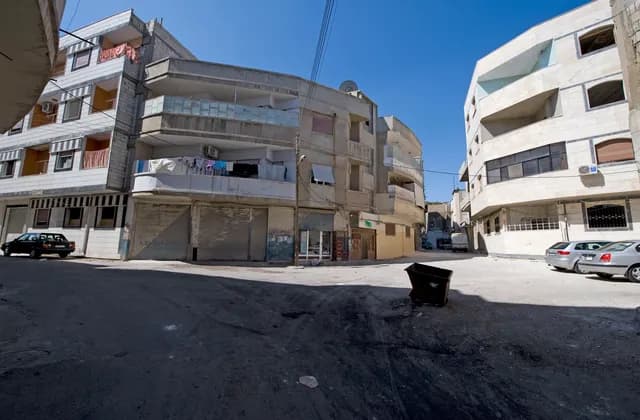
Distinguishing Housing Need from Investment Demand
Distinguish housing need from investment demand in Syria by examining household suitability, affordability and evidence about the proposed property.
Read more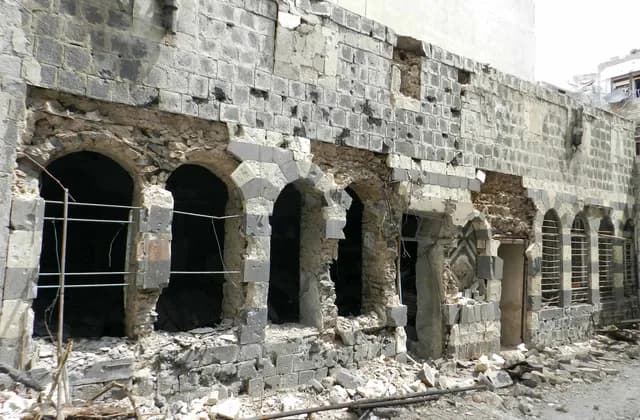
What Reconstruction Estimates Can and Cannot Tell a Buyer
Understand Syria reconstruction estimates by checking their scope and uncertainty, separating assessed need from funding, building condition and prices.
Read more
How to Read Syria Economic News as a Property Buyer
Read Syria economic news by checking the source, dates and claim type, then identify the specific evidence still needed for your property decision.
Read more