About Syria
Arwad: Understanding the Island and Its Mainland Connections
Understand Arwad through dated island photographs and heritage sources, with practical questions about mainland connections and a specific home.
In this article
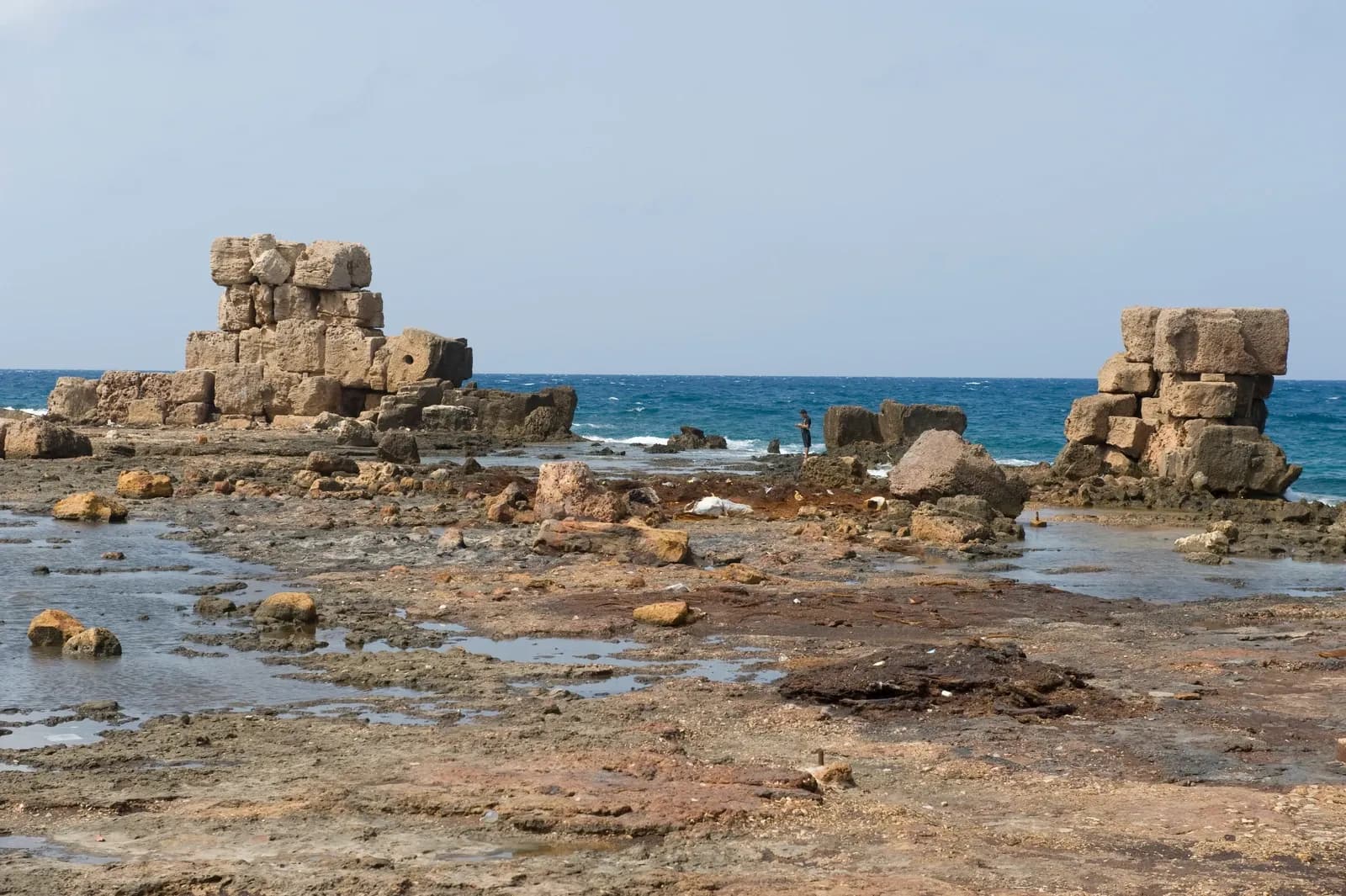

Arwad's mainland connection is central to understanding it. Research that stops at an island photograph leaves out the other end of the journey: the mainland arrival point, onward movement and the way ordinary needs would be met. For a reader considering a visit or investigating accommodation, the useful question is how the island setting would fit a real routine. That question requires current, specific answers alongside an understanding of the place's history.
This article introduces Arwad through primary heritage material and two clearly dated photographs. It does not provide a boat timetable, a route booking or a recommendation to travel. Instead, it helps you organise questions about an island and the mainland together, so a striking image does not become the entire basis of your plan.
An island facing the mainland
The Syrian heritage submission for Arwad, published on UNESCO's Tentative List on 8 June 1999, locates the island about three kilometres offshore from Tartus. Its description relates ancient Aradus, the island, to Antaradus on the mainland, and identifies a dense urban fabric, harbour, wall remains and two medieval forts. These are the heritage characteristics described in that dated submission.
The UNESCO Syria country page continues to list Arwad as a tentative site. It is not among the country's inscribed World Heritage properties. The distinction is useful when a caption or promotional description loosely uses the term UNESCO site. The source also gives no present-day assurance about access, visitor facilities or the status of an individual building.
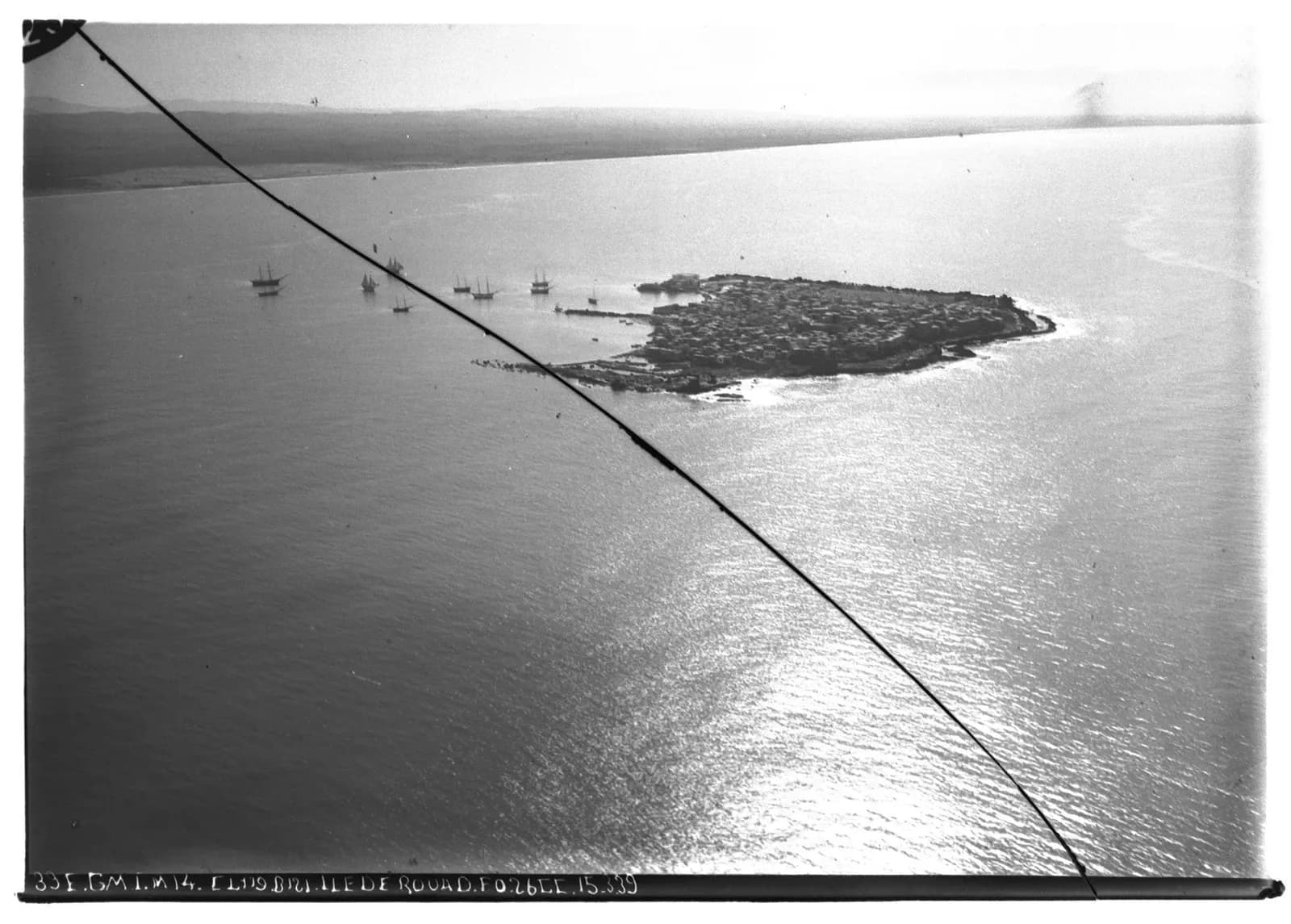
The accompanying 2008 shore photograph brings the scale of stone remains and their immediate marine surroundings into view. It is a location photograph, not a route survey. The older aerial image, captured in 1939 and preserved in the Ifpo archive, shows island and mainland in a single frame. Its purpose here is historical orientation; the intervening decades prevent it from serving as a map of today's buildings or landing arrangements.
Give both ends of a proposed journey equal attention
An island journey has more than a departure time. Start with the place you would leave on the mainland, the proposed crossing and the point you would reach on the island. Then add the onward route at each end. Ask who is supplying the information and when it was last confirmed. Geographic proximity alone does not establish an available service or a workable connection.
If you are planning around an appointment, work backwards from the time you must be there. Identify the pieces still awaiting confirmation: access requirements, the operator's current arrangements, boarding location, the route after arrival and a feasible return. Allowing extra time is sensible, but a large empty buffer cannot solve an unknown last connection. Obtain current travel advice appropriate to your nationality and circumstances before making arrangements.
Be especially careful with old photographs of boats. A vessel appearing in an archive is evidence that it was photographed there at that date. It does not identify a current operator, passenger service or safety standard. The property viewing trip guide can help organise an appointment brief and the evidence needed before committing to a journey.

Test an ordinary day, then an awkward one
To investigate island living, choose an ordinary task and describe it from start to finish. For example, imagine bringing a bulky household item from a mainland collection point to a proposed home. What is its size? Who would handle each stage? Where would it be received, and what route would it follow after landing? These are questions to resolve, not claims about a service available on Arwad.
Next consider a day when the plan changes. A missed appointment, an unavailable crossing or a delivery that cannot be accepted at the proposed time would each need a response. Ask how you would reschedule, communicate and avoid leaving essential tasks dependent on one unconfirmed arrangement. The purpose is to understand the practical consequences of a connection, rather than assume that island life follows one universal pattern.
Keep recurring household needs on a separate list. Work arrangements, supplies, access to appropriate care and regular mainland commitments deserve individual checks. You may find that one household has few frequent mainland trips while another would need them several times a week. That difference comes from the proposed routines; it cannot be settled by a beautiful coastline photograph.
Bring the investigation down to the doorway
Once the broader connection is understood, focus on the specific building. Request evidence that joins the arrival route to the entrance, the entrance to shared spaces and those spaces to the rooms. A short sequence can be more useful than a collection of attractive interiors with no clear relationship to one another. Keep the property's location identifier attached to every set of notes.
For a hypothetical home, sketch where belongings would go on arrival and how the household would move through the space. A compact room might meet one person's needs while leaving another without somewhere to work or store equipment. Ask about dimensions and what is included, and avoid adding a proposed alteration to the existing accommodation count.
The broader property brief framework helps translate these observations into requirements. Ownership, building condition and permissions need their own appropriate review. Neither an island's heritage significance nor a well-presented interior photograph supplies those answers.
Use the archive for the question it can answer
Historical images can make Arwad's setting easier to picture. The 1939 aerial view demonstrates the visual relationship between the island and the distant coast at that time. The 2008 ground photograph offers a closer view of stone and shore. Reading them together provides a sense of scale while preserving a clear boundary around their dates and viewpoints.
For a wider coastal reference, consult the published Latakia city guide. For Arwad itself, finish your first research pass with a concise record of the proposed journey, household tasks, building questions and current evidence still missing. That record gives the next conversation a useful purpose: establishing whether the particular plan can work, with the island and its mainland connections considered together.
Continue your research
Raqqa and Al-Hasakah: Starting Your Regional Research
Start Raqqa and Al-Hasakah research with clear geographic scope, dated photographs and place-name records before comparing evidence for specific homes.
Read more
Deir ez-Zor and the Euphrates: Geographic Context
Locate Deir ez-Zor through dated river photographs and urban research, then separate geographic context from the address and access evidence a home needs.
Read moreSources & review
Last reviewed:
PUT YOUR RESEARCH TO WORK
Start with a place.
Explore Syria’s cities and narrow your property search.